
Has My Slab Foundation Moved?
Many homeowners may not regularly consider certain aspects of their home until issues arise. One critical yet often overlooked component is the slab foundation.
This type of foundation is crucial as it provides your home with a solid base above ground, safeguarding against underground shifts that could lead to structural damage. When a slab foundation shifts, it’s a matter of urgency that requires professional intervention. Read on to learn the signs indicating that your slab foundation is moving.
What is a Slab Foundation?
Slab foundations, also known as monolithic or mono slab foundations, are single-piece concrete slabs that rest directly on the ground. These foundations are favored for their cost-effectiveness, being among the most affordable foundation types available.
The design of a slab foundation eliminates the need for a crawl space, reducing concerns about pests and mold beneath your home. Its singular construction minimizes the presence of weak spots, enhancing its durability and stability.
Predominantly found in warmer climates, slab foundations are less suited to areas where the ground undergoes frequent freeze-thaw cycles, as this can lead to cracking. Similarly, significant underground shifts can also cause cracks. Recognizing the signs of movement in your slab foundation is crucial for maintaining the integrity of your home. Let’s explore how to detect if your slab foundation has moved and identify the underlying causes of these issues below.
Signs and Symptoms of Slab Foundation Movement
Several signs can indicate your slab foundation has moved. Movement should be addressed by a professional right away. If you see any of the following signs, contact your trusted foundation expert right away.
Cracks and Gaps in the Walls
As the ground moves, your slab foundation shifts. This causes the amount of pressure placed on the rest of your house to change as well. This can result in cracks in your walls, even if they are made out of solid concrete. Cracks in walls aren’t always an indication of foundation issues, but larger cracks, those at 45-degree angles, or those with zigzag patterns are a definite cause for concern.
Gaps are another symptom of foundation movement, especially when they occur in your window and door frames or between your crown molding and ceiling. Gaps around windows and doors can let cold or hot air inside, making your HVAC system work harder and use more electricity. They can also allude to foundation problems.
It’s hard to know for sure if you have foundation problems based on cracks and gaps alone. That’s why it’s always a good idea to get the help of a professional when you aren’t sure about the cause.
Sticking Doors
Do you have a hard time shutting the doors in your home? If your slab foundation has moved, it can change the angle of your door frames, making doors stick to or grind against frames as you open or close them. This tends to be especially problematic in hot and humid weather, but it can happen any time of year with significant foundation movements.
Doors that swing open or closed on their own can also indicate a foundation problem. These issues can make one side of your house slightly higher than the other, which allows gravity to open or shut your doors depending on where they are located in your home.
Uneven or Cracked Floors
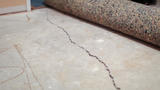
Slab foundations that have been properly installed and remain in excellent condition allow your house to have completely even flooring. Noticeable bulges, buckles, sags, or slopes in your floors often mean your foundation is shifting or failing.
Not all uneven flooring is so obvious, but you can test to see whether your floor is even by gently placing a ball, such as a golf ball, marble, or ping pong ball, in the middle of a hard floor to see if it rolls. The direction and speed the ball rolls can tell you which way the floor is sloping and how severe the sloping is.
It can be helpful to conduct this test throughout the room and other areas in the house if possible. You can also use a bubble level or laser level to see whether your floor is uneven. If your floor is only uneven by a few degrees, it can still mean the foundation has shifted.
Floors made of concrete, tile, or stone can also crack due to shifts in foundation pressure. Keep an eye out for cracks on your floor’s hard surfaces if you suspect your slab foundation has moved.
Leaks or Other Plumbing Problems
When your foundation moves, it can wreak havoc on the various systems and appliances you have installed throughout your home. Although pipes are generally made of strong substances, they are often no match for the hundreds or thousands of pounds of pressure your shifted foundation can subject them to.
Burst pipes or leaks are commonly associated with shifting foundations. They should be addressed immediately to avoid widespread damage throughout your home.

Protect Your Home from Foundation Damage

Foundation movement leads to damage in your home, affecting everything from structural integrity to the functionality of appliances. Alpha Foundations understands how this puts a strain on your day-to-day; we take a comprehensive approach to foundation repair to ensure these problems are stopped.
Contact us today to schedule your free inspection and receive a no-obligation estimate. Let Alpha Foundations help you protect your home from the consequences of foundation movement, ensuring peace of mind and the safety of your living space.

Ted Dryce
Publish Date:
Last Modified Date:
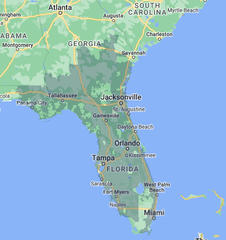
Our Locations
1755 Benchmark Ave.
Fort Myers, FL 33905
55 North Industrial Loop
Orange Park, FL 32073
3723 Hogshead Rd
Apopka, FL 32703
66 Industrial Park Dr.
Monticello, FL 32344
1615 118th Ave. N
St. Petersburg, FL 33716