
The Florida Guide to Crumbling & Chipping Concrete
It’s a fact of living here: Florida is wet.
Our state’s humid environment, high risk for hurricanes, and heavy annual rainfall create a challenging environment for concrete on your property. In many cases, it leads to damaged concrete.
Sometimes, concrete damage may even escalate to crumbling and chipping concrete; but this doesn’t mean you have zero concrete repair options. In fact, there are plenty of things you can do to prevent concrete issues.
In this article, we’ll go over what causes crumbling and chipping concrete and what you can do about it.
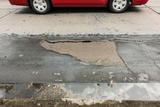
3 Factors of Concrete Damage
Understanding the causes behind concrete damage is the first step in fixing it. Here are the three most common causes:
1. Weak Soil
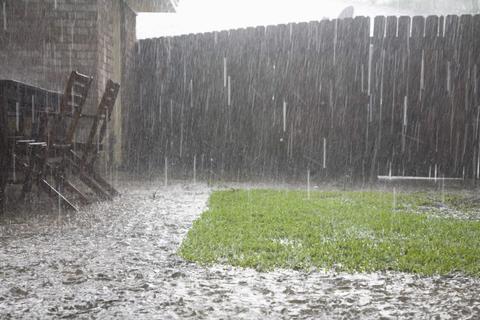
Concrete is directly supported by the ground beneath it. However, soil can become weak for several reasons, including:
- Poor compaction
- Drought and dryness
- Soil washout/erosion
In Florida, soil washout and poor compaction are the most common causes of weak soil, but drought sometimes affects areas in the Panhandle. In all cases, the soil becomes structurally unstable.
Since concrete is a heavy material, it overwhelms weakened soil and sinks into the ground. This leads to cracked, crumbling, and uneven sections of concrete on your property.
2. Tree Roots
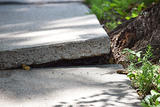
Tree roots often extend twice the size of the tree’s canopy. That means any trees located on your property likely have roots right next to or below concrete structures.
Roots affect your concrete in two ways:
They constantly search for water and nutrients in the soil. Over time, roots may cause the ground to become dry and weak, making it difficult to keep concrete supported.
Tree roots may put pressure on concrete if they grow too close. As shown in the image, the roots may contend with the concrete’s placement and cause sections to crack, crumble, or become uneven.
3. Concrete is Not Flexible
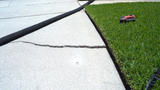
In addition to damage from external forces, concrete is not a flexible material. That’s why soil issues and tree roots cause damage so easily.
Stress and pressure on concrete are a recipe for disaster because of concrete’s innate inflexibility. If one section sinks into weak soil or is pushed on by tree roots, the surrounding sections of concrete won’t move with it.
As a result, cracks form along the concrete’s surface, and different sections will sink, crumble, and chip unevenly.
3 Ways to Protect Concrete Around Your Home
Before getting into the solutions to concrete damage, it’s important to note that crumbling and chipping concrete cannot be lifted or put back together. This type of concrete damage is severe and makes the structural integrity of concrete non-existent.
Instead, if your concrete is crumbling and chipping, it is better to repour the structures entirely.
Anyone who claims to have a simple fix to concrete suffering from chipping and concrete is not providing high-quality service. Still, concrete can still be repaired if it has become cracked or uneven, and Alpha Foundations can help.
Protecting concrete is possible with professional solutions. Here’s what our experts recommend for homeowners across Florida.
1. Polyurethane Injection (PolyRenewal™)
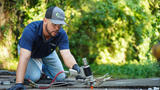
One way to protect concrete is with polyurethane injection, an innovative solution that fills voids in the soil below your concrete. When you work with Alpha Foundations, polyurethane injection is easy.
Our team drills penny-sized holes in the affected concrete and then places injection ports into them. Then, the polyurethane solution flows below the concrete, where it begins to expand and cure.
This expansion is good for two reasons:
- The polyurethane pushes down on the soil and compresses it, making it stronger.
- The polyurethane pushes up on the concrete and lifts it back into place.
With polyurethane injection, the main causes behind concrete damage (besides tree roots) are addressed all at once. These include:
- Weak soil
- Concrete inflexibility
2. Proper Drainage
Since water is one of the primary causes of concrete damage, it’s important to mitigate the amount of water near your concrete structures. This is best done with efficient outdoor drainage tools like gutters and downspouts.
Make sure your gutters are free of debris and solid throughout. Older gutters may have rusted or cracked, which provides plenty of opportunity for water to leak onto concrete.
The same goes for downspouts on your property. Additionally, make sure downspouts drain water far away from concrete. If located too close, tons of water will drain right below the structure.
3. Remove Trees
You might want to consider removing any trees located close to concrete on your property since their roots are a common cause of damage.
In fact, any trees located right next to your home may also lead to foundation damage. Make sure to find a reliable tree removal service in your area if you decide to take this route.
Call Florida’s Concrete Repair Expert
If you notice damaged concrete on your property, it might be time to call a local concrete repair company like Alpha Foundations. At Alpha, we want to help you make the best possible choice for your home, and we want you to get the best, most timely service.
So, if you have any questions about the concrete around your house, call us today, and we’ll be happy to share our tested expertise with you. We’ll also be happy to get you a free inspection and quote on repairs.
FAQs
Yes, concrete can be poured in the winter. Although, setting times may differ depending on the temperature.
However, in Florida, it usually isn’t cold enough to make a huge difference.
Concrete is a mixture of different materials. Making concrete begins by mixing cement (making up 10%-15%) and water (making up 15%-20%) together to make a sticky paste.
After this initial mixture, the paste is combined with aggregates (making up 65-75%) like stone, sand, or gravel. Once everything is packed together, concrete is made.
No. While this may give the illusion of leveled concrete, this is only a surface-level fix. Since weak soil is the main cause of concrete damage, pouring more on top doesn’t address that issue.
In fact, it might even make matters worse. Pouring concrete on top of damaged concrete means the soil has even more weight to contend with. Sinking, crumbling, and cracking will only become more severe.

Groundworks
*Disclaimer: “Concrete leveling” means the process by which cracked, uneven concrete is stabilized, and in many cases lifted, by means of PolyRenewal™ polyurethane foam. Alpha Foundations does not guarantee that PolyRenewal™ can make your concrete perfectly level.
Publish Date:
Last Modified Date:
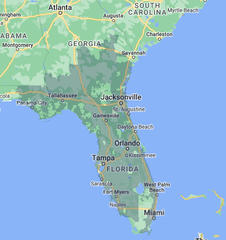
Our Locations
1755 Benchmark Ave.
Fort Myers, FL 33905
55 North Industrial Loop
Orange Park, FL 32073
3723 Hogshead Rd
Apopka, FL 32703
66 Industrial Park Dr.
Monticello, FL 32344
1615 118th Ave. N
St. Petersburg, FL 33716