
Debunking Seawall Repair Myths: What Polyurethane Can and Cannot Do
Key Takeaway
- Polyurethane foam stabilizes soil, stops washout, and extends seawall life.
- It’s not just a quick patch; it provides long-term support.
- Won’t weaken in water; it’s built for marine conditions.
- Works best when installed by professionals, not DIY kits.
- Can’t fix broken panels or replace a collapsed seawall. Think reinforcement, not rebuild.
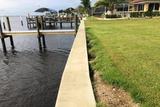
Waterfront property comes with big benefits…and big responsibilities.
One of the biggest? Keeping your seawall in good shape. When cracks, soil loss, or leaks appear, many homeowners turn to polyurethane foam injection as a modern repair solution.
But is it worth it? Polyurethane foam repair has its fans and skeptics, and the truth often gets lost between the two.
That’s why we’re breaking down the top five myths about polyurethane foam injections for seawall repair. By the end, you’ll have the facts, and you can decide if it’s the right solution for your property.
- Key Takeaway
- Myth 1: Polyurethane foam is just a quick patch
- Myth 2: Poly foam weakens over time in water
- Myth 3: Poly foam repairs the entire seawall structure
- Myth 4: DIY foam kits are as effective as professional repair
- Myth 5: Poly foam is harmful to the environment
- How Alpha Foundations Repairs Your Seawall with Deep Renewal Injections
- The Bottom Line on Poly Foam Seawall Repair
Myth 1: Polyurethane foam is just a quick patch
TRUE: Poly foam isn’t a bandage fix. It expands to fill voids, stabilizes soil, and reduces pressure on the wall, providing long-term reinforcement.
Myth 2: Poly foam weakens over time in water
FALSE: Professional-grade polyurethane is hydrophobic, meaning it won’t absorb water. It’s designed to last in harsh marine conditions.
Myth 3: Poly foam repairs the entire seawall structure
TRUE: Foam strengthens the ground behind the wall and seals leaks, but it can’t replace broken or severely cracked panels. Structural failures may still require reconstruction.
Myth 4: DIY foam kits are as effective as professional repair
FALSE: DIY kits can’t reach the deep voids and hidden water paths, causing seawall damage. Professionals use specialized equipment to inject foam deep, precisely where needed, ensuring full coverage and long-term stability. DIY fixes often miss the root problem, leading to repeated issues.
Myth 5: Poly foam is harmful to the environment
FALSE: Once cured, polyurethane foam is inert and non-toxic, meaning it won’t break down, release chemicals, or contaminate the surrounding soil or water. In fact, one of the reasons it’s used for seawall repair is that it’s safe to install near lakes, rivers, and coastal areas.
How Alpha Foundations Repairs Your Seawall with Deep Renewal Injections
When you choose Alpha Foundations, the process is simple, transparent, and effective:
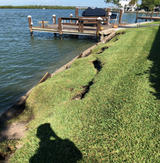
Step 1: Inspection & Documentation
- A seawall specialist will walk the property with you
- Take detailed photos and notes of problem areas
- Review concerns and create a customized repair plan
Step 2: Deep Renewal Injections
- Polyurethane foam is injected behind the seawall where soil has washed out
- The foam expands to fill voids and stabilize the ground
Step 3: Lasting Results with Key Benefits
- Non-invasive: No heavy equipment or messy excavation
- Lightweight: Fills voids without adding stress to the seawall
- Watertight Barrier: Blocks water under and behind the wall
- Eco-friendly: Safe for soil, water, and marine life
- Seals Cracks and Joints: Stops active leaks instantly
- Reinforces Soil: Prevents future erosion and washout
With Alpha Foundations’ proven process, your seawall is restored quickly, safely, and built to last.
The Bottom Line on Poly Foam Seawall Repair
Ready to find out if polyurethane foam repair is right for your seawall?
Don’t let myths hold you back. Schedule a free inspection with Alpha Foundations today.
Our experts will create a plan to keep your property protected for years.
Seawall FAQs
No, it works behind the wall to stabilize soil and stop leaks, but it doesn’t change the wall’s appearance.
No, once cured it’s inert and safe for soil, water, and marine life.
No, it reduces soil washout significantly, but seawalls still require monitoring over time.

Leah Leitow
Publish Date:
Last Modified Date:
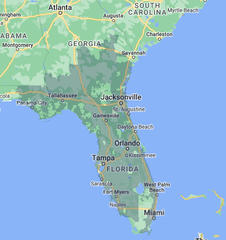
Our Locations
1755 Benchmark Ave.
Fort Myers, FL 33905
55 North Industrial Loop
Orange Park, FL 32073
3200 W Copans Rd.
Pompano Beach, FL 33069
3723 Hogshead Rd
Apopka, FL 32703
66 Industrial Park Dr.
Monticello, FL 32344
1615 118th Ave. N
St. Petersburg, FL 33716
515 N Flagler Dr.
Ste. P-300
West Palm Beach, FL 33401