
How to Handle White Mold in Your Crawl Space
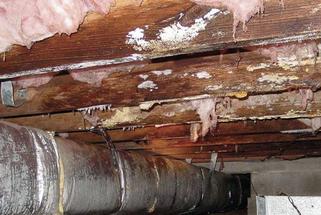
Mold in your crawl space is a common but unhealthy problem that can lead to issues such as pest infestations, musty odors, and structural damage. There are many types of mold that can grow in this area under your home, including white mold.
White mold is often confused with other substances and problems, so we want to give you an overview of this type of mold and how to handle it if it’s growing in your crawl space.
What Is White Mold?
White mold is a species of fungi whose name is derived from its appearance as a white substance. White mold is commonly known to have two textures: fuzzy or light and powdery. Although textures may differ, the implications of the existence of white mold in your crawl space are still serious.
The growth and spread of white mold are often the result of elevated levels of moisture and low-to-no airflow. That is why white mold can often gather in crawl spaces, especially in Florida where humidity levels are high nearly nine months out of the year. Florida also experiences heavy rainfall throughout the year, which seeps into the soil beneath your crawl space and serves as the catalyst for the growth of white mold.
Where Does White Mold Form in Crawl Spaces?
White mold often forms in one of two places in your crawl space. The most common area in which you may find white mold is where the structure of your crawl space meets the soil. As rainfall and water gather in the soil and make it damp throughout the year, mold grows as humidity spikes both before and after rainfall.
Exposed soil is also a common contributor to the growth of white mold. Often, this is due to an incomplete or missing vapor barrier. The limited airflow and excess moisture in the soil increase humidity levels and allow for mold growth. White mold can also commonly form on the floor joists of your crawl space if the conditions are the same.
What is the Difference Between Efflorescence and White Mold?
It is quite easy to confuse efflorescence with white mold. White mold is often much harder to get rid of than efflorescence and has much more serious implications. The key difference between white mold and efflorescence is that efflorescence can vary between white, brown, and yellow colors. Even if both substances appear to look the same, efflorescence has no odor and dissolves in water, unlike white mold.
How to Detect White Mold
The easiest way to detect white mold is through a visual inspection of your home and its crawl space. Recognizing common signs of the growth of white mold will also help you to detect its presence. However, your local technician will most likely detect white mold through a process called direct mold sampling. There are many diverse types of sampling practices, including tape lifts and swab/bulk samples. Your specialist will send these samples to a lab for testing to determine if you have white mold growing in your crawl space.
Tips for Spotting White Mold Growth
White mold grows and spreads fast under the right circumstances. It is common for it to reach various parts of your home that are located near your crawl space. Inspecting your crawl space for white mold and keeping in mind the signs that may indicate its accumulation will serve you well to prevent its spread. It is imperative to spot the growth of white mold in its earliest stages before it spreads to other parts of your home. Keep an eye out for white mold to prevent further damage to the structural integrity of your home, as well as your physical health.
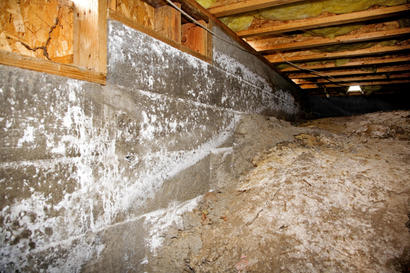
- Changes in Climate: Dampness and increased humidity levels in and around the area of your crawl space are an indicator that white mold has begun to grow and spread there.
- Health Symptoms: The musty odors that occur in conjunction with white mold growth can cause mild to severe allergic reactions. These reactions can include sneezing, coughing, shortness of breath, watery eyes, itchy skin, dizziness, headaches, and in severe cases: asthma.
Contact Alpha Foundations for Crawl Space Solutions

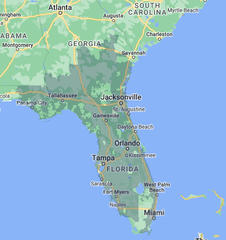
Alpha Foundations, an expert in foundation repair and crawl space encapsulation throughout Florida, has been helping Florida residents address and prevent white mold in their crawl spaces for more than 20 years. Through our proven processes and expertise, we have tackled even the most severe cases of crawl space mold.
Our specialists also offer crawl space encapsulation services that will help prevent the growth of white mold before it even starts!
Contact us today for your free inspection!

Groundworks
Publish Date:
Last Modified Date:
Our Locations
1755 Benchmark Ave.
Fort Myers, FL 33905
55 North Industrial Loop
Orange Park, FL 32073
3200 W Copans Rd.
Pompano Beach, FL 33069
3723 Hogshead Rd
Apopka, FL 32703
66 Industrial Park Dr.
Monticello, FL 32344
1615 118th Ave. N
St. Petersburg, FL 33716
515 N Flagler Dr.
Ste. P-300
West Palm Beach, FL 33401